
Always do not pick more than you need the edible plants. Food deteriorates rapidly in the tropics. Edible plants like Bignay, Mango, Sweet sop, Sour sop, Wild Fig, Ceylon Spinach, Tamarind Peanut and the Yam Beans are the most powerful edible plants.
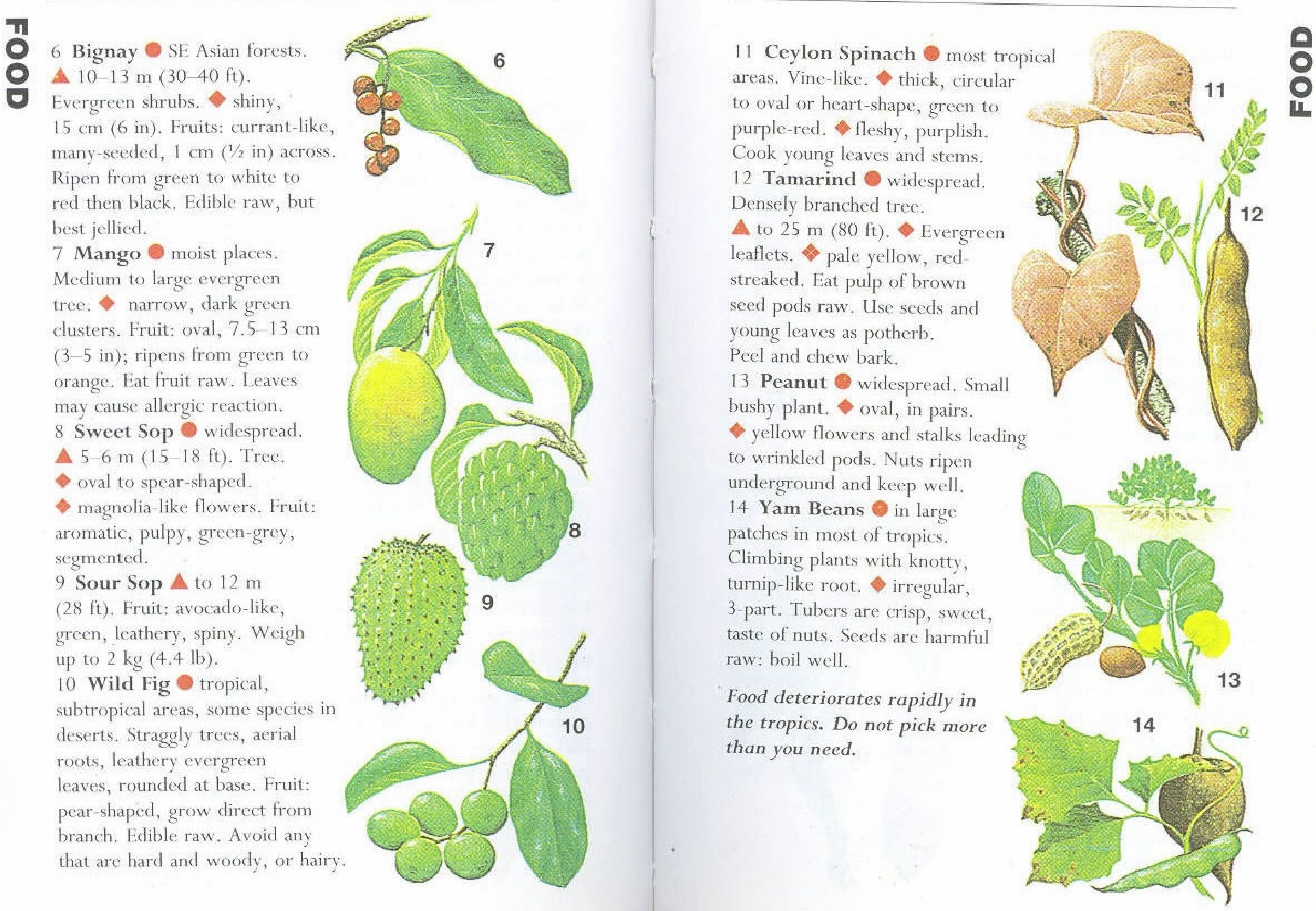
SAS 044 – Tropical Plants
Related posts:
SAS 155 - Diseases
When in water, the survivor is more likely to be exposed to water - borne diseases, or those carried by insects and animals. Tropical diseases are less familiar and will therefore be dealt with here in more detail. Where drugs are not available, treatment is largely a matter of dealing with symptoms and making patient comfortable.
When in water, the survivor is more likely to be exposed to water - borne diseases, or those carried by insects and animals. Tropical diseases are less familiar and will therefore be dealt with here in more detail. Where drugs are not available, treatment is largely a matter of dealing with symptoms and making patient comfortable.
How to Perform a Tracheotomy
This strategy, particularly called a cricothyroidotomy, ought to be undertaken just when an individual with a throat obstacle is not fit to inhale to any detectable degree, no panting sounds, no hacking, and just after you have endeavored to perform the Heimlich Maneuver several times without dislodging the obstacles.
This strategy, particularly called a cricothyroidotomy, ought to be undertaken just when an individual with a throat obstacle is not fit to inhale to any detectable degree, no panting sounds, no hacking, and just after you have endeavored to perform the Heimlich Maneuver several times without dislodging the obstacles.
SAS 028 - Food
Should stomach trouble occur, drink plenty of hot water; do not eat again until the pain goes. If it is severe, induce vomiting by tickling the back of the throat. Swallowing some charcoal will also induce vomiting and may absorb the poison at the same time.
Should stomach trouble occur, drink plenty of hot water; do not eat again until the pain goes. If it is severe, induce vomiting by tickling the back of the throat. Swallowing some charcoal will also induce vomiting and may absorb the poison at the same time.
SAS 030 - Edible Plants
In Spring and summer yound shoots are tender. Some may be eaten raw; many are best cooked; wash in clean water, rub off hairs and boil in a little water so they cook in the steam. Leaves are rich in vitamins and minerals.
In Spring and summer yound shoots are tender. Some may be eaten raw; many are best cooked; wash in clean water, rub off hairs and boil in a little water so they cook in the steam. Leaves are rich in vitamins and minerals.
SAS 092 - Organising Camp
Camp Discipline: Do not plan amusement in camp: drain, gut and skin on the trap line to pull in event to traps, not to the camp.
Camp Discipline: Do not plan amusement in camp: drain, gut and skin on the trap line to pull in event to traps, not to the camp.
SAS 053 - Animal Tracking
Small animals like termites, bees, wasps and hornets, Ants, Locusts, Crickets and grasshopers, snails slugs and worms can be easily tracked and trapped for hunting purposes.
Small animals like termites, bees, wasps and hornets, Ants, Locusts, Crickets and grasshopers, snails slugs and worms can be easily tracked and trapped for hunting purposes.
SAS 173 - Disaster Strategy & Fire
The best protection from fire is prevention. many fires are caused by carelessness with lighted cigarettes and burning matches. The sun shining through a piece of glass can start a blaze in a dry season. If you are present where a fire starts in woodland, or on heath or grassland, your first action should be to smother it.
The best protection from fire is prevention. many fires are caused by carelessness with lighted cigarettes and burning matches. The sun shining through a piece of glass can start a blaze in a dry season. If you are present where a fire starts in woodland, or on heath or grassland, your first action should be to smother it.
PS Emergency Preparedness Checklist (3)
Get ready amaze arrangements prepared that incorporates Normal Exit track, Emergency passageway tracks, Fire Extinguisher, Smoke Detectors, Disaster supplies assortment, Doors, Collapsible Ladder and all crisis things in the Floor arrangements.
Get ready amaze arrangements prepared that incorporates Normal Exit track, Emergency passageway tracks, Fire Extinguisher, Smoke Detectors, Disaster supplies assortment, Doors, Collapsible Ladder and all crisis things in the Floor arrangements.
Finding South
If you are in the southern hemisphere, you would point 12 o clock at the sun but still split the difference between 12 and the hour hand for north. Also, if you practice daylight saving time, you should subtact one hour from the hour hand.
If you are in the southern hemisphere, you would point 12 o clock at the sun but still split the difference between 12 and the hour hand for north. Also, if you practice daylight saving time, you should subtact one hour from the hour hand.
SAS 094 - Camp Tools
Tree Felling: Check overhead for dead branches and hornets nests. Clear Creepers and branches which could deflect blows. Cut branches off from the outside of the join. Cut from both sides of the tree, first chopping out notch at an angle of 45 and another on the opposite side ata lower level on the side to which you want to tree to fall.
Tree Felling: Check overhead for dead branches and hornets nests. Clear Creepers and branches which could deflect blows. Cut branches off from the outside of the join. Cut from both sides of the tree, first chopping out notch at an angle of 45 and another on the opposite side ata lower level on the side to which you want to tree to fall.
SAS 131 - Rescue & Signalling
By day smoke is good locator. Have a supply of smoke-producing material ready to put on your fires. Smoke not only helps rescue aircraft find you, it also shows surface wind direction. Make sure smoke is downwind of landing site and of any panel codes you have laid so it does not obscure them from above.
By day smoke is good locator. Have a supply of smoke-producing material ready to put on your fires. Smoke not only helps rescue aircraft find you, it also shows surface wind direction. Make sure smoke is downwind of landing site and of any panel codes you have laid so it does not obscure them from above.
SAS 099 - Knots
Simple Knots: These ties are briskly made and will help you perceive the more convoluted ties that accompany. Overhead Knot: Make a circle and pass the live close over through it. Overhead Loop: Fixed circle for tossing over a projection. Twofold the finish of rope and tie overhand tie with the circle.
Simple Knots: These ties are briskly made and will help you perceive the more convoluted ties that accompany. Overhead Knot: Make a circle and pass the live close over through it. Overhead Loop: Fixed circle for tossing over a projection. Twofold the finish of rope and tie overhand tie with the circle.
SAS 172 - Dangerous Water Creatures & Predicting Disater
Accidents and isolation are not the only causes of a survival situation. many natural and man made forces can produce disasters in which your survival skills and strategies will come into play.
Accidents and isolation are not the only causes of a survival situation. many natural and man made forces can produce disasters in which your survival skills and strategies will come into play.
SAS 084 - Fire
Gouge a small depression at a near end of baseboard. Cut a cavity below for tiner. Shape the spindle evenly. Make a bow from a pliable shoot and hide, twine or a bootlace. Use hollow piece of stone wood to steady top of the spindle and exert downloard pressure. Wind bowstring once round spindle.
Gouge a small depression at a near end of baseboard. Cut a cavity below for tiner. Shape the spindle evenly. Make a bow from a pliable shoot and hide, twine or a bootlace. Use hollow piece of stone wood to steady top of the spindle and exert downloard pressure. Wind bowstring once round spindle.
SAS 054 - Animal Dangers & Trapping
It is easier to trap than to hunt small prey. Choice of baits and site is important. Food may be scarce, but a little used as bait may bring rewards.Be patient and give the traps tim. Animals will be wary until they get used to them - that is when they will run into them.
It is easier to trap than to hunt small prey. Choice of baits and site is important. Food may be scarce, but a little used as bait may bring rewards.Be patient and give the traps tim. Animals will be wary until they get used to them - that is when they will run into them.
SAS 040 - Fungi
Agaricus fungi: Avoid any that stain yellow when cut or bruised, or that smell of carbolic. Some young buttons are hard to distinguish from the deadly Amanitas. Dont Use any fungi you cant positively identify.
Agaricus fungi: Avoid any that stain yellow when cut or bruised, or that smell of carbolic. Some young buttons are hard to distinguish from the deadly Amanitas. Dont Use any fungi you cant positively identify.
SAS 118 - Moving
Negotiating territory at night can be dangerous, but may be necessary. Because it is difficult to see clearly you are easily disorientated. It is always darker among trees, so keep to open country if you can. When looking at an object at night, look at one side rather than directly at it. It is hard to distinguish anything in a dark mass, but edges show clearly.
Negotiating territory at night can be dangerous, but may be necessary. Because it is difficult to see clearly you are easily disorientated. It is always darker among trees, so keep to open country if you can. When looking at an object at night, look at one side rather than directly at it. It is hard to distinguish anything in a dark mass, but edges show clearly.
Safety
Some of the Health Hazards that needs to be followed are by placing the signs of Normal Material, Slightly Hazardous material, Extreme danger. Also Fire Hazards, Specific Hazards like oxidizer, acid, Alkali and Inseparability Hazards also plays a key role.
Some of the Health Hazards that needs to be followed are by placing the signs of Normal Material, Slightly Hazardous material, Extreme danger. Also Fire Hazards, Specific Hazards like oxidizer, acid, Alkali and Inseparability Hazards also plays a key role.
 Upload your infographic here and contribute to our community.
Leave a Reply