
The danger of hunting is animals will attack except in self-defence, but do not camp on a trail or near an animal watering spot. Do not provoke a bear encounter as bears are scavangers and will come to camps in search of food. Do not get close or try to catch them.
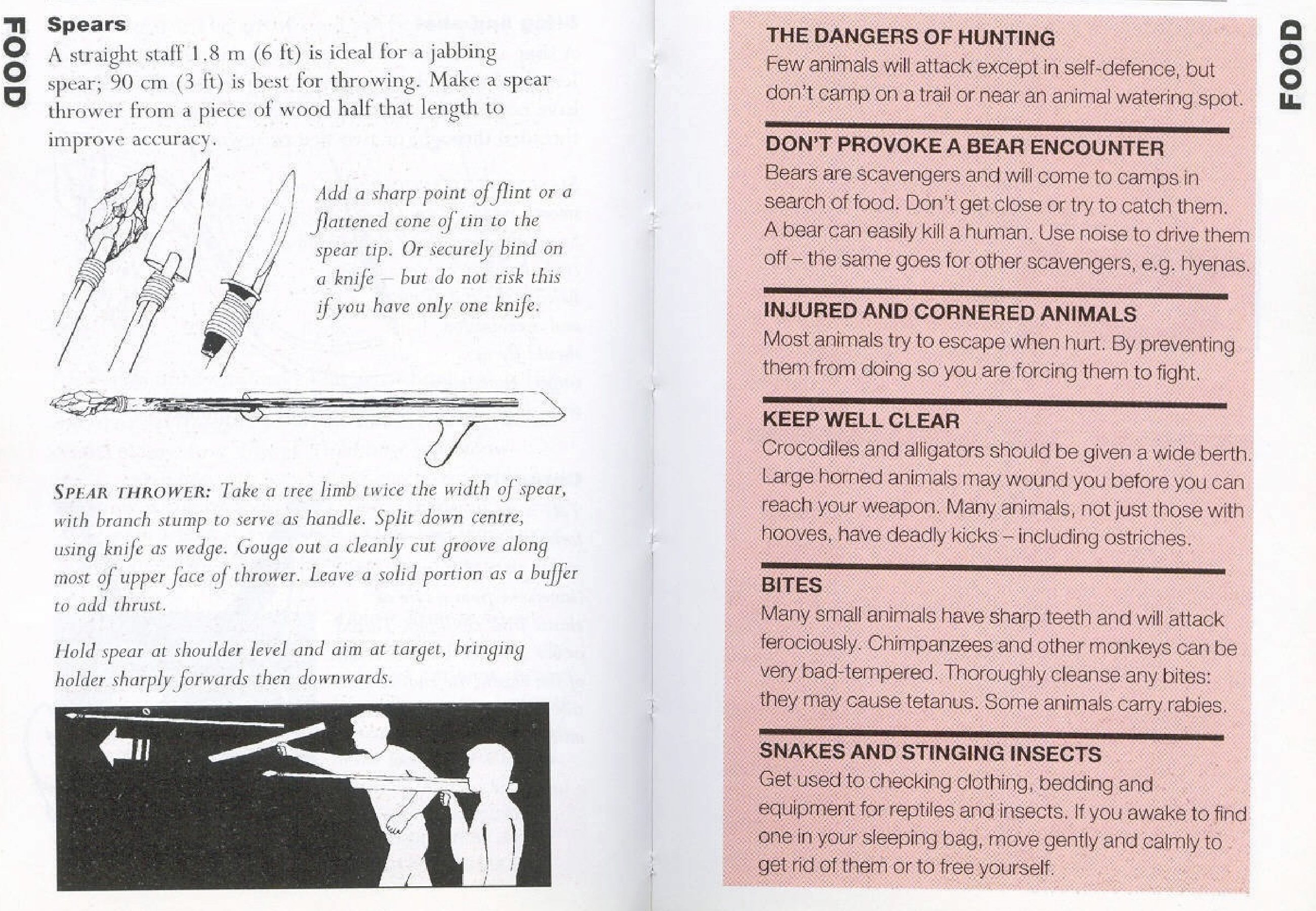
SAS 063 – Hunting
Related posts:
PS Family Disaster Plan (6)
Learn the types of natural disasters in your region. Local Emergency management or civil denense officials can identify which disasters are most liekly to hit your community.Identify which human-caused or technological disasters can affect your region
Learn the types of natural disasters in your region. Local Emergency management or civil denense officials can identify which disasters are most liekly to hit your community.Identify which human-caused or technological disasters can affect your region
PS Emergency Preparedness Checklist (1)
Whenever fiasco strikes, you should not have much chance to act. Plan now for a sudden crisis. Memorize how to ensure your self and adapt to any sort of debacle by arranging ahead.
Whenever fiasco strikes, you should not have much chance to act. Plan now for a sudden crisis. Memorize how to ensure your self and adapt to any sort of debacle by arranging ahead.
FC 29 - Make a Foxhole Radio
A Foxhole Radio is a radio assembled by G.I.s around Planet War II. The foxhole radio contrasted from the precious stone radio. An extremely sharp edge and pencil were utilized as a diode as a part of a foxhole radio while a bit of precious stone is utilized as a diode as a part of a gem radio. The Foxhole Radio is similar to a precious stone situated in that it tries not to need an outside fo...
A Foxhole Radio is a radio assembled by G.I.s around Planet War II. The foxhole radio contrasted from the precious stone radio. An extremely sharp edge and pencil were utilized as a diode as a part of a foxhole radio while a bit of precious stone is utilized as a diode as a part of a gem radio. The Foxhole Radio is similar to a precious stone situated in that it tries not to need an outside fo...
SAS 131 - Rescue & Signalling
By day smoke is good locator. Have a supply of smoke-producing material ready to put on your fires. Smoke not only helps rescue aircraft find you, it also shows surface wind direction. Make sure smoke is downwind of landing site and of any panel codes you have laid so it does not obscure them from above.
By day smoke is good locator. Have a supply of smoke-producing material ready to put on your fires. Smoke not only helps rescue aircraft find you, it also shows surface wind direction. Make sure smoke is downwind of landing site and of any panel codes you have laid so it does not obscure them from above.
SAS 125 - Sea Survival & Signalling
How to Signal at Sea ? Use flares, dye markers and movement of any kind to attract attention at sea. If you have no signalling equipment, wave clothing or tarpauliins and churn the water if it is still. At night or in fog use a whistle to maintain contact with other survivors.
How to Signal at Sea ? Use flares, dye markers and movement of any kind to attract attention at sea. If you have no signalling equipment, wave clothing or tarpauliins and churn the water if it is still. At night or in fog use a whistle to maintain contact with other survivors.
SAS 068 - Fishing
Using the floats and weights in hunting is very important. A small floating object attached to the line, visible from the bank, will show you when you have a bit. Small weights between float and hook stop the line trailing along the water or too near the surface, while leaving the hook itself in movement.
Using the floats and weights in hunting is very important. A small floating object attached to the line, visible from the bank, will show you when you have a bit. Small weights between float and hook stop the line trailing along the water or too near the surface, while leaving the hook itself in movement.
PS Family Disaster Plan (2)
To be on a safer side, keep enough supplies in your home to help for no less than several days. Amass a fiasco Supplies unit with things you might need in a clearing. Store the aforementioned supplies in inquiry, effortless to convey holders for instance rucksacks, duffel packs or secured waste compartments.
To be on a safer side, keep enough supplies in your home to help for no less than several days. Amass a fiasco Supplies unit with things you might need in a clearing. Store the aforementioned supplies in inquiry, effortless to convey holders for instance rucksacks, duffel packs or secured waste compartments.
PS Family Disaster Plan (7)
Some of the Tips to survive with a family disaster plan are to Conduct a home hazard hunt by identifying the objects in the house that could be dangerous in an emergency. Take a first aid and CPR class.Have enough disaster supplies on hand. Develop an emergency communication plan. make arrangements for your pets as part of your household
Some of the Tips to survive with a family disaster plan are to Conduct a home hazard hunt by identifying the objects in the house that could be dangerous in an emergency. Take a first aid and CPR class.Have enough disaster supplies on hand. Develop an emergency communication plan. make arrangements for your pets as part of your household
SAS 138 - First Aid & Choking
Heimlich Manqeuvre: Stand behind a cognizant setback, arms around them. Make a clench hand of one hand and press it thumb inwards above navel but beneath breastbone. Catch different hand adjust the clench hand. Pull sharply upwards and inwards four times.
Heimlich Manqeuvre: Stand behind a cognizant setback, arms around them. Make a clench hand of one hand and press it thumb inwards above navel but beneath breastbone. Catch different hand adjust the clench hand. Pull sharply upwards and inwards four times.
SAS 024 - Arid Regions
Heat causes misfortune of apetite – don't drive yourself to consume. Protein sustenance build metabolic high temperature and water misfortune. Depending on if water is rare, continue consuming to a least and attempt to consume just dampness-holding nourishments.
Heat causes misfortune of apetite – don't drive yourself to consume. Protein sustenance build metabolic high temperature and water misfortune. Depending on if water is rare, continue consuming to a least and attempt to consume just dampness-holding nourishments.
SAS 146 - First Aid, Burns & Fractures
Types of burns: Deep burns are charred or white, and bone or muscle may be visible. Superficial burns are much more painful. Blisters should never be burst deliverately. If face and neck are burnt, ensure airway is clear. Scalds are caused by liquids treat as for burns.
Types of burns: Deep burns are charred or white, and bone or muscle may be visible. Superficial burns are much more painful. Blisters should never be burst deliverately. If face and neck are burnt, ensure airway is clear. Scalds are caused by liquids treat as for burns.
SAS 140 - First Aid & Mouth to Mouth
Artificial Respiration: With any form of resucitation the first five minutes are the most critical, but if breathing does not start, keep artificial respiration up for at least an hour. In a group, take turns. Dont give up !
Artificial Respiration: With any form of resucitation the first five minutes are the most critical, but if breathing does not start, keep artificial respiration up for at least an hour. In a group, take turns. Dont give up !
PS Family Supply Kit (1)
Disasters happen anytime and any where. And when disaster strikes, you may not have much time to respond. A highway spill of hazardous material could mean instant evacuation. After a disaster, local officials and relief workers will be on the scene, but they cannot reach everyone immediately.
Disasters happen anytime and any where. And when disaster strikes, you may not have much time to respond. A highway spill of hazardous material could mean instant evacuation. After a disaster, local officials and relief workers will be on the scene, but they cannot reach everyone immediately.
SAS 127 - Sea Survival, Water Rationing & Fishing
Conserve emergency food supplies until needed. Try to live off sea life. There are dangerous fish, but in the open sea, fish are generally safe to eat. Near the shore there are dangerous and poisonous species.
Conserve emergency food supplies until needed. Try to live off sea life. There are dangerous fish, but in the open sea, fish are generally safe to eat. Near the shore there are dangerous and poisonous species.
SAS 137 - Rescue & First Aid
Before approaching a casuality, check for danger from falling debris, gas traffic, etc. Switch current off before touching electrocution victims.
Before approaching a casuality, check for danger from falling debris, gas traffic, etc. Switch current off before touching electrocution victims.
SAS 079 - Building Shelter
If you decide that there is no hope of rescue and it is impracticable to make your own way to safety due to distance, time of year, lack of equipment or physical condition, make a comfortable, permanent shelter.
If you decide that there is no hope of rescue and it is impracticable to make your own way to safety due to distance, time of year, lack of equipment or physical condition, make a comfortable, permanent shelter.
SAS 026 - Tropical Regions
A wide mixed bag of tree grown foods, roots and leaves are ready. Banana, papaya, mango and figs are effortlessly distinguished, anyhow you might discover the abundance of tropical nourishments puzzling. An extensive variety of well evolved creatures, reptiles, feathered creatures and fish might be chased, trapped and casted a line out there. In addition there are sufficient materials fo...
A wide mixed bag of tree grown foods, roots and leaves are ready. Banana, papaya, mango and figs are effortlessly distinguished, anyhow you might discover the abundance of tropical nourishments puzzling. An extensive variety of well evolved creatures, reptiles, feathered creatures and fish might be chased, trapped and casted a line out there. In addition there are sufficient materials fo...
SAS 168 - Poisonous Snakes & Lizards
Crocodiles and alligators are amphibious, livingo n the banks of lakes, streams and swamps. Not all species are considered dangerous, but do not take chances. Most float almost submerged with only eyes and nostrils breaking the surface of the water.
Crocodiles and alligators are amphibious, livingo n the banks of lakes, streams and swamps. Not all species are considered dangerous, but do not take chances. Most float almost submerged with only eyes and nostrils breaking the surface of the water.
 Upload your infographic here and contribute to our community.

Leave a Reply